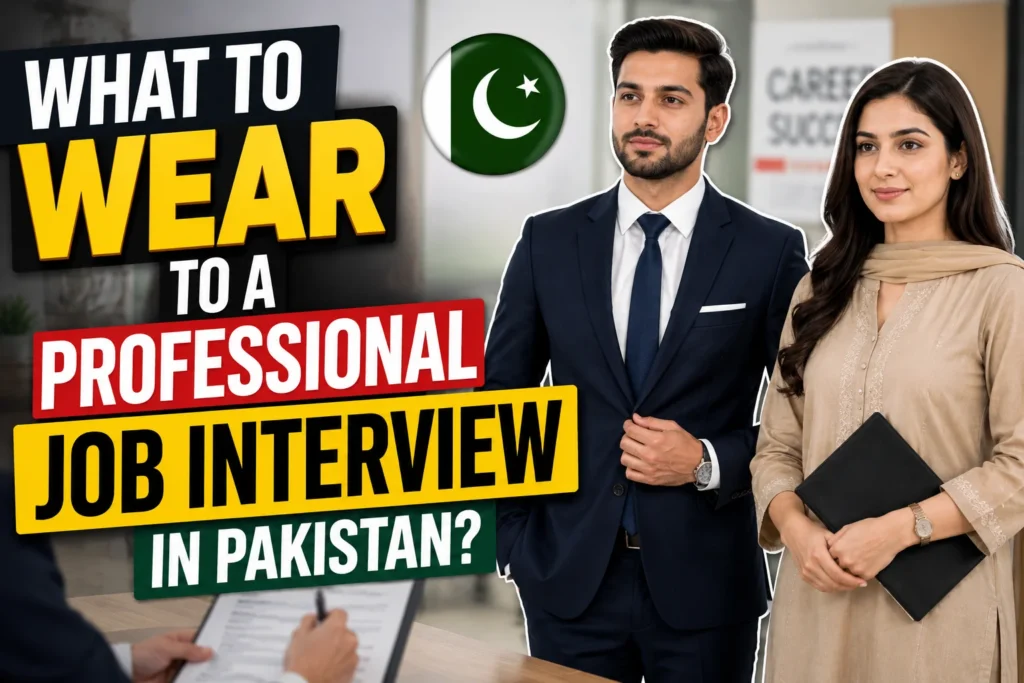
What to Wear to a Professional Job Interview in Pakistan?. It goes without saying that first impressions matter. In a cutthroat job market in Pakistan, your qualifications can help you get your foot in the door, but your attire is what may seal the deal for you. A professional job interview’s attire communicates the candidate’s seriousness towards the role and respect for the hiring manager and organization.
Although dressing up can be a challenging aspect when navigating an interview, particularly in Pakistan, there is always a happy medium between following international corporate dressing norms and accommodating local sentiments.
Regardless of whether you’re interviewing at an MNC in Karachi, an IT startup in Lahore, or a government office in Islamabad, your outfit needs to be immaculate.
Why Your Interview Attire Matters in Pakistan
But before we talk about clothes, what makes them so important, anyway?
1. The “Suit” Factor: Respect for the Process
Pakistani society, like many others, generally attaches high value to formal wear as a mark of respect. If you come in jeans and a t-shirt, chances are you don’t place much value on the opportunity, or your interviewer’s time. A “casual Friday” at the office still requires more formal attire in the case of a job interview.
2. The Cultural Nuance
In a Western corporate culture, you must wear a suit or if you wish to enter the Government or an educational establishment. It is worn at formal occasions, for interviews where western is not really suitable, and tradition allows. Research the company you want to enter into!
3. The Unspoken Contract
An interview is not just about showing them what you can do, but it’s also about presenting the company’s brand and how you’ll fit into it. Your clothing implies how you’ll act around clients and superiors.
Step 1: Research the Company Culture
Now this is arguably THE most crucial step. There’s no ‘one size fits all’ strategy when it comes to Pakistan. Separate it out.
- MNCs & Banking: This is where the western formals kick in the suit, tie, patent loafers etc.
- Public Sector/Government/Academia: White Shalwar Kameez.
- Public Sector/Government/Academia: White Shalwar Kameez, that’s the go-to. Tech & Startups: If it’s somewhere like Careem or a Lahore-based software house, they may have a “smart casual” code but never interview in your jeans, however nice! A smart Kameez or blazer with chinos is safe.
- Corporate: Somewhere like Engro, Nishat or Lucky Cement, dark suits work but a formal Shalwar Kameez and waistcoat are also considered highly acceptable, and more so, dignified.
Pro Tip: Look at company social media!. Have a look at photos of events on their Facebook pages, their employees on LinkedIn to get a sense of the atmosphere.
The Men’s Interview Wardrobe
Let’s break down the specifics for men applying for professional roles in Pakistan.
The Western Suit (The Corporate Standard)
This one goes best for top management positions, for banking jobs, multinationals.
1. The Suit (The Core)
- Color: Navy Blue and Charcoal Grey solid suits are considered to be your best bet. Black is fine too but might seem too overpowering for day time interviews; save it for board room interviews or formal evening events. Don’t go for loud patterns or very bold blues or reds.
- Fit: Say bye to over-sized suits. This is an age for slim, fitted and tailored. Jacket fitting should be snug over your shoulders without any stress. Jacket sleeves should fall an inch above your wrist so that half an inch of your shirt sleeve is visible at the wrist.
- Fabric: Being a tropical country (it gets quite hot in Karachi, Lahore etc.), always opt for light wool blended fabric or a cool breathable fabric. Avoid linen as it tends to wrinkle quickly.
2. The Shirt
- Color: Solid white or a light blue. They look professional and won’t get you in any trouble. A tiny pattern might work if you are feeling a little brave, but white is never the wrong choice.
- Collar: point collar or spread collar. Make sure it’s starched and neat.
- Fit: It fits snugly against your neck with room for one finger. No blouses should occur.
3. The Tie (The Accent)
- Pattern: Skip the novelty ties. Go for solid color, classic stripe, or small dot.
- Color: Burgundy, navy, or dark green. Keep your tie darker than your shirt.
- Length: The tip of the tie should end roughly halfway down your belt buckle.
4. The Trousers
- Make sure your suit jacket matches. Trousers and jacket should both fold just above your shoe top, (no more than one or two creases, also called a break, above your shoe). I suggest flat-fronted pants instead of pleated because it’s a trendier look.
The Formal Shalwar Kameez (The Cultural Choice)
Actually, for many jobs in Pakistan, this is not only acceptable but actually a better choice! Here’s a breakdown:
1. The Fabric
- Think: white, beige or soft pastel shades.
- Winter: Khaddar or thicker cotton – think navy blue, dark brown or charcoal grey.
- Pro Tip: Your Shalwar Kameez must be ironed. A crumpled suit looks, frankly, idiotic.
2. The Design
- Think: plain, think simple. No garish embroidery or ostentatious buttons please!
- A plain collar: either traditional, or Mandarin is best.
- Your shalwar should not be overly tight or so baggy that you could get lost in it. Modern, straight-leg shalwars are more professional.
3. The Waistcoat
- If you’d like to achieve an extra element of sophistication and add some additional dignity to the entire outfit, you may be seen sporting a plain colored waist coat, you may either complement your trouser or Shalwar Kameez with it in an appropriate dark shade or it could be of a subtly contrasting color. This helps the interviewer perceive you as an earnest and dignified persona.
Business Casual (Smart Casual)
If you’re in a startup, fashion firm then just remove your tie.
- Chinos with Blazer: Wear a navy blazer with a good, well-pressed beige or gray chinos.
- Shalwar kameez with blazer: The unique, Pakistan corporate wear that’s really picking up these days.
- A plain white or light blue kameez: with a navy blazer over it works extremely well.
It’s an indication you respect your heritage and the current trends of world.
Also Check: How to Handle Difficult Questions in a Panel Interview?
Accessories and Footwear for Men
- Shoes: this is non negotiable. With Suit, Oxords or Derbys. Keep them dark black or brown and always shining.
- With Shalwar Kameez: Formal Peshwari Chappal or basic black leather shoes.
- NO Sports Shoes or Sneakers. Socks: your socks should match with your pants, NOT shoes. Hence, if you are wearing a navy blue pant, then wear a navy blue socks.
- Watch: basic and simple. This indicates time value. No bulky sports watch.
- Belt: Match your belt’s leather with your shoe. If you wear black shoes wear black belt.
- Grooming Facial Hair: well managed and trimmed. If you have a beard, trim your edges. Any such form of grooming that involves stubble would generally be discouraged especially for entry level roles in Traditional Finance and Banking.
- Hair: tidy and comb well. No messy long hair.
- Skin: a fresh and clean face, apply moisturizer if you have dry skin.
- Scent: a clean, light deo or cologne. Nothing very strong or any sort of thickattar.
The Women’s Interview Wardrobe
The options for women are more varied, allowing for a mix of creativity and professionalism. However, the rules of modesty and professionalism are equally strict.
The Formal Shalwar Kameez
This is what most women prefer and consider standard attire for an interview in Pakistan.
1. The Fabric and Color
- Pastels: are usually safe, but sober colours like Maroon, Navy blue, dark green or even Black are acceptable as well. Refrain from wearing neon or over-the-top brightly coloured outfits.
- Fabric: Cotton, Jamawar or Khaddar. The fabric shouldn’t be see-through (a clear ‘No-Go’ for a transparent net fabric for obvious, professional reasons).
2. The Cut
- Length of the Kameez: should generally be knee-length or slightly below knee-length.
- Fit of the Kameez: formal fit, not a tight-fitting one. Sleeves of the Kameez should be full sleeves, or at least cover the elbow.
- Shalwar style: Straight fit or slightly tapere dshalwar. A Patiala shalwar can be a bit too informal for an interview.
3. The Dupatta (Crucial Element)
- This element is what completes the whole outfit.
- Dupatta styling: Style your dupatta in a formal manner. It should not be draping at the back of your body. Bring it to the front, drape it across your shoulders and if necessary, fold it neatly and place on your shoulder.
- Fabric: Should be the right complement to your outfit. Chiffon, or a cotton dupatta works. Colour:The color of the dupatta should complement the Shalwar Kameez; again, a solid or a pastel shade will work wonders.
What to Wear to a Professional Job Interview in Pakistan?
This works for the corporate banks, airlines and multinational offices.
THE SUIT
- Pants Suit: A blazer with corresponding pants is a power outfit. Colors-Navy, charcoal or black.
- Skirt Suit: A blazer with a knee-length pencil skirt works as an equally powerful look. However, do ensure that the skirt doesn’t get too short-above knee level is acceptable.
THE BLOUSE/SHIRT
- Wear a conventional button down shirt.
- Avoid deep necklines. Simple collar and neckline.
- For Saree-ensure you are wearing a weighty fabric that’s not sheer like banarasi or even a plain cotton that’s neatly draped in the traditional manner.
The Saree
- A traditional saree for those in education, media or government works wonderfully as a formal outfit.
- Material-Silk, or formally woven cotton. Avoid georgette, too drape-able material for interviews.
- Blouse-Full sleeve, or three-fourth sleeve blouse that is high necked.
Accessories and Footwear for Women
- Heels: Block heels or kitten heels are best. 1-2 inch is comfortable and appropriate. No extreme stilletto (flashy) or flat sandal (too informal). Closed toe is usually safer.
- Makeup: Less is more. Either go for a “no-makeup makeup look” or an “office look.” No eye shadow, glitter, or brightly colored lips (red or hot pink). A nude or pale pink lip is best.
- Jewelry: Minimalism is key. Simple studs for ears, a delicate watch, one ring is suffice. No dangling jhumkas, nor huge bangles (that jingle when you shake someone’s hand).
- Hair: Tied up, or sleekly blown dry. A neatly done ponytail, bun or open style is acceptable. Ensure hair is out of your face.
- Nails: Neatly trimmed and clean. Polish is acceptable, but stick to nude or a French manicure. No red, blue or green for nail polish.
- Bag: structured tote bag or simple handbag. No backpack or sling bags.
The “No-No’s”
- Jeans: Other than if the interview is a “casual interview,” you would be surprised how inappropriate even dark-wash jeans look in Pakistan. The only way for them to be acceptable is if they are specified.
- Sportswear/sneakers: Don’t show up for your interview in your tennis shoes or gym wear; a sports jacket is even out of the question!
- Loose/Tight: Clothing Make sure that what you’re wearing fits you. Too big a shirt will make you look like you’re drowning in it, and too tight a shirt will make you look like you are trying too hard.
- Branded Clothing: Don’t dress in your designer clothes; show up with the designer label on your clothes and they’ll focus on your shirt more than what you’re saying.
- Loud Jewelry: Gold chains and large, gaudy rings look completely out of place in Pakistan in an interview. Similar to the clothing, women shouldn’t wear excessively large, jangling bracelets and earrings that clatter whenever they move their heads.
- Dirty shoes: Most managers in Pakistan can look at a candidate’s shoes and form some idea about their attention to detail, so make sure yours are shiny and free of any scuff marks.
- Excessive cologne/perfume: Pakistan is very accustomed to strong scents but, the confines of an interview room are somewhat restrictive. Try to wear a subtle fragrance if any at all, so you don’t give the interviewer a headache before they’ve heard your first sentence.
Dressing for Different Seasons in Pakistan
Pakistan has extreme weather. You can’t wear a wool suit in June in Lahore, nor can you wear a thin cotton shirt in December in Islamabad.
- Summer (April – September):
- Men: Cotton or linen suits; light-weight khaddar for traditional wear. Always carry a handkerchief (you will likely sweat). Go for lighter colors like beige, sky blue, or white to reflect heat.
- Women: Cotton or lawn suits. Ensure the lawn isn’t transparent. Choose breathable dupattas like cotton or silk.
- Winter (November – February):
- Men: Woolen suits or thick khaddar suits. A proper trench coat or a shahla coat over the suit adds a professional look.
- Women: Khaddar suits, woolen blazers. You can wear a solid-colored pashmina or heavy shawl with the suit to look professional and stay warm.
The Day of the Interview Checklist
The night before. Iron clothes. Polish shoes. Place things in one spot.
The day of the interview. Have a shower.
Deodorant: Neutral. Pop in a mint, but do not have anything with onions or garlic just before the interview. Last and final checks. Stand in a mirror ( full length).
- Tie straight?
- Dupatta correctly pinned?
- pants creased?
- Shoes shiny?
Frequently Asked Questions (FAQs)
Am I allowed to wear a Shalwar Kameez for an interview with a multinational bank?
Definitely yes! But just make sure to wear a suit of this clothing in very very formal attire. That should be a dark, solid color, tailored suit, along with matching waist coat. Not anything in colourful prints.
Are ties mandatory for men in Pakistan?
Depends on industry but it depends a whole lot on industry too. For banking, legal and government, absolutely yes. For tech and media, shirt without tie (with blazer) can also do well. It’s better to wear a tie than to go without.
Is it ok to wear dupatta in Western corporate office?
Yes absolutely yes, because modesty will be taken positively. You can drape it around your shoulders or neck. You should style it properly so you will not have to keep adjusting it during the interview. You need to tuck it well into your outfit.
Which color is best to wear a suit for an interview in Pakistan?
The best is definitely blue and gray (dark, naval blue/charcoal) when it comes to a suit for men. For women, Navy blue, black, beige and maroon are the most potent colours for suits and also safe colours.
How crucial is grooming for an interview in Pakistan?
It is as equally as important as the outfit that you wear to the interview. Grooming shows that you possess self discipline and that you look after yourself as well. Your hair should be well set, nails clipped short and you should be clean shaved (unless you have a good trimmed beard).
Should I wear a perfume?
Yes, wear it, but very very light, no very heavy attars or oud. You would probably be sharing the interview space with other interviewees so you do not want to be the most obnoxious one. Light and fresh is the way to go.
Conclusion
Here’s the first ever dress-up guide in Pakistan for a formal interview; all it takes is your skill at balancing western style with local sensivity! Whether it’s an elegant western business suit or a perfectly starched Shalwar Kameez, what matters is the fit.
Try not to draw attention to your outfit and let the interviewer ponder on the other attributes you’ve possessed. Good looks can actually give you confidence and nothing opens boardroom doors in Pakistan more effectively than confidence.
So, invest in a good suit, get your Khaddar stitched, buff up those shoes and walk in tall. The dream job is all yours in Pakistan.